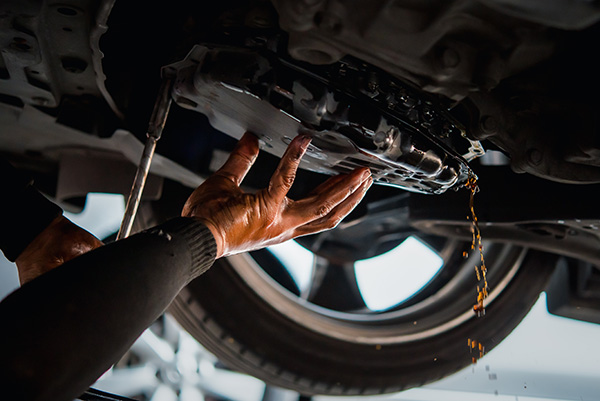
An oil leak under your car can be hard to pin down from the driveway. Oil spreads easily, runs along metal surfaces, and collects dirt as it moves. By the time it reaches the ground, the drip is not always directly under the leaking part.
The oil pan gasket is one of the common leak points under the engine. Still, it is not the only one. Knowing what to look for can help you understand whether the oil pan gasket is likely involved or whether another leak higher on the engine is making it look that way.
Why The Oil Pan Gasket Can Leak
The oil pan sits at the bottom of the engine and holds the engine oil when the vehicle is parked or shut off. A gasket seals the pan to the engine block, keeping oil inside. Over time, heat, age, pressure changes, and normal engine vibration can wear that gasket down.
Once the gasket hardens, shrinks, or loses its seal, oil can start seeping around the edge of the pan. At first, the leak might only leave dampness around the gasket line. Later, it can form drops along the bottom of the pan or leave spots where the vehicle is parked.
Where The Oil Pan Leak Usually Shows Up
An oil pan gasket leak usually appears low on the engine. If you look underneath, the oil pan may look wet around the edges where it meets the engine. You might also see oil collecting at the bottom of the pan because gravity pulls it down.
The leak can show up as a small spot on the driveway after the vehicle sits overnight. In some cases, oil can blow backward while driving, so the underside of the vehicle may appear coated farther behind the engine. That makes the source harder to read without first cleaning the area.
Oil From Above Can Fool You
One reason oil pan gasket leaks get misread is that oil from higher up can run down and collect on the pan. A valve cover gasket, oil filter housing, timing cover, rear main seal, or oil pressure switch can leak first, then send oil toward the bottom of the engine.
From underneath, that can make the oil pan look guilty even when it is only catching oil from another leak. That is why a glance at the wettest spot is not enough. The source is found by tracing the oil path back to its source, not where it finally drips.
Signs The Oil Pan Gasket Is A Strong Suspect
A few patterns make the oil pan gasket more likely. Oil around the full edge of the pan, wetness at the gasket seam, and drops forming directly along the pan rail all point in that direction. The leak may be worse after the engine has been running because warm oil flows more easily.
Drivers may notice a burning oil smell if the leak reaches hot exhaust parts nearby. Others only see spots on the ground and a slowly dropping oil level. A dashboard oil warning should be treated with greater urgency because it can indicate that the engine oil level or pressure is already low.
Why Low Oil Should Be Taken Seriously
A small oil leak can feel easy to live with, especially if the car still runs well. The problem is that engine oil does more than sit in the pan. It protects bearings, timing components, pistons, camshafts, and other moving parts every time the engine runs.
If the level drops too far, internal parts lose protection. That can lead to extra wear, noise, overheating in certain areas, and damage that costs far more than a gasket repair. Regular maintenance helps catch oil leaks before they lower the level enough to create a bigger engine concern.
How A Shop Confirms The Leak
Finding the source of an oil leak takes more than spotting oil underneath the car. The area may need to be cleaned first so fresh oil can be traced. A technician will check the pan gasket, drain plug, oil filter area, upper engine seals, timing cover, and nearby components before calling the oil pan gasket the cause.
In some cases, dye is added to the oil so the leak source can be found with a special light after the vehicle runs. That kind of inspection helps separate a true oil pan gasket leak from oil that traveled down from another part of the engine. It also prevents replacing the wrong gasket and having the leak return.
When The Oil Pan Gasket Needs Repair
If the gasket is clearly leaking, the repair should not be delayed too long. The oil pan may need to be removed, cleaned, resealed, and reinstalled with the correct gasket or sealant, depending on the engine design. On some vehicles, access is simple. On others, suspension, exhaust, or other parts may make the job more involved.
The important part is fixing the real source. If the pan gasket is leaking, properly resealing it helps maintain the oil level and keeps the underside of the engine cleaner. If another leak is above it, that issue needs to be handled instead.
Get Oil Leak Repair In Merritt Island, FL, With Inmon Automotive
If you see oil spots under your car or suspect the oil pan gasket is leaking, Inmon Automotive in Merritt Island, FL, can find the source and recommend the right repair.
Bring it in before a small oil leak lowers the oil level or turns into a larger engine problem.