Posted on 8/28/2026
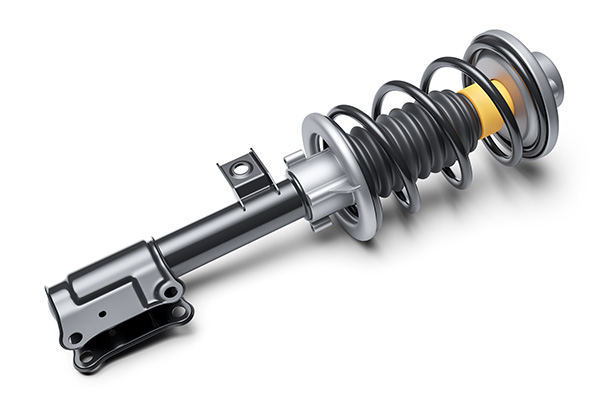
Shocks and struts both control suspension movement, but they are not the same component. A shock absorber mainly controls spring motion, while a strut also serves as a structural part of the suspension and helps support wheel alignment. Drivers often use the terms interchangeably because both can create similar symptoms when worn. Excessive bouncing, poor tire contact, nose-diving during braking, and unstable cornering can develop with either design. Identifying which system the vehicle uses is the first step toward the correct repair. What Shock Absorbers Do A vehicle’s springs support its weight and allow the wheels to move over bumps. Without shock absorbers, the springs would continue bouncing after every dip, pothole, and steering input. Shocks use hydraulic fluid and internal valves to control that motion. Most shock absorbers mount between the suspension and the vehicle frame or body. They do not usually carry the vehicle’s weight or determine th ... read more
Posted on 7/30/2026
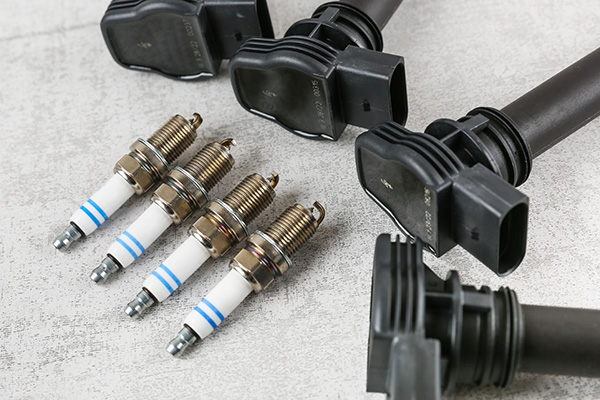
An engine misfire has a way of making the whole vehicle feel off. The idle may shake a little at a red light, the engine may stumble when you accelerate, or the check engine light may start flashing right when you are trying to merge into traffic. It is one of those problems drivers can feel, even if they do not know the exact name for it. Spark plugs, ignition coils, and spark plug wires are common causes, but they are not the only possible causes. Fuel delivery, compression, vacuum leaks, sensors, and mechanical engine wear can create similar symptoms. The trick is knowing what ignition trouble usually looks like and why testing matters before throwing parts at the misfire. What A Misfire Actually Means A misfire means one or more cylinders did not burn the air-fuel mixture correctly. For the engine to run cleanly, each cylinder needs air, fuel, compression, and spark at the right time. If one of those pieces is missing or weak, the cylinder can stumble rather tha ... read more
Posted on 6/26/2026
%20copy.jpg)
Cooling system problems do not always look serious at first. A small coolant drip, a faint sweet smell, or a temperature gauge that climbs a little higher than normal can seem like something to watch for a while. The car still starts, still drives, and may even cool back down once traffic clears. That is what makes these problems risky. The cooling system is there to keep engine heat under control every minute the car is running. When it stops doing that job correctly, the damage can move from hoses and coolant parts into the engine itself. Coolant Loss Reduces Heat Control Coolant circulates through the engine, radiator, hoses, heater core, and water pump to remove heat. The system is designed to stay full and pressurized. Once the coolant drops too low, heat cannot move through the engine evenly. At first, the change may only appear under certain conditions. The temperature gauge might rise in traffic, with the A/C on, or during a longer drive. That warning shoul ... read more
Posted on 5/29/2026

An oil leak under your car can be hard to pin down from the driveway. Oil spreads easily, runs along metal surfaces, and collects dirt as it moves. By the time it reaches the ground, the drip is not always directly under the leaking part. The oil pan gasket is one of the common leak points under the engine. Still, it is not the only one. Knowing what to look for can help you understand whether the oil pan gasket is likely involved or whether another leak higher on the engine is making it look that way. Why The Oil Pan Gasket Can Leak The oil pan sits at the bottom of the engine and holds the engine oil when the vehicle is parked or shut off. A gasket seals the pan to the engine block, keeping oil inside. Over time, heat, age, pressure changes, and normal engine vibration can wear that gasket down. Once the gasket hardens, shrinks, or loses its seal, oil can start seeping around the edge of the pan. At first, the leak might only leave dampness around the gasket line ... read more
Posted on 4/30/2026
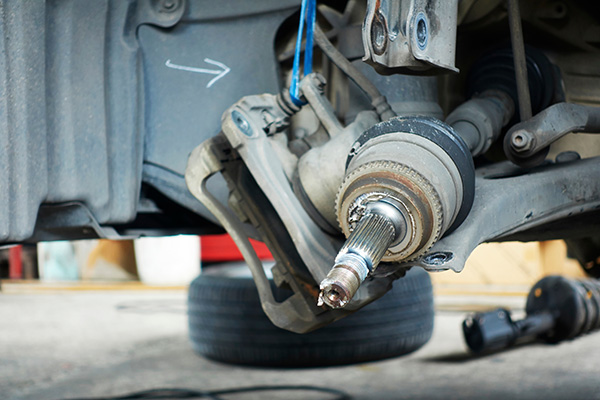
Many drivers hear CV axle and CV joint used as if they mean the same thing. That is understandable because the two parts work together, live in the same area, and fail in related ways. Still, they are not identical parts, and knowing the difference helps when you are trying to make sense of a noise, vibration, or repair estimate. The short version is simple. A CV axle is the full shaft assembly, while the CV joints are the flexible joints attached to that assembly. One includes the other. What A CV Axle Actually Is The CV axle is the shaft that transfers power from the transmission or differential to the drive wheels. On a front-wheel-drive vehicle, these axles are doing a big job every time you accelerate, turn, or pull away from a stop. Many all-wheel-drive vehicles use them, too. A complete CV axle assembly generally includes the axle shaft itself, an inner CV joint, and an outer CV joint. So when a shop says the CV axle needs replacement, they usually mean repl ... read more