It’s a weird feeling when the dash lights up like everything’s fine, but the engine refuses to start. The radio turns on, the headlights work, maybe the screen boots up, and yet the car won’t crank the way it should. This is one of the most common scenarios we see, and the fix depends on one key detail: what happens when you turn the key or press the start button.
The difference between a click, a slow crank, or a normal crank that never fires tells you a lot.
Why Lights Can Still Work When The Engine Won’t Start
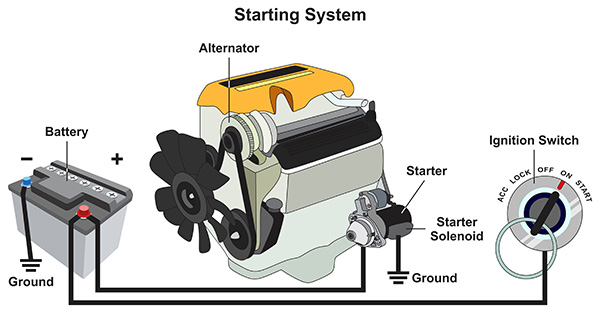
Your lights and accessories need far less power than your starter motor. A weak battery can have enough voltage to run the dash, but not enough capacity to spin the engine. Think of it like having enough water pressure to wash your hands but not enough to run the sprinkler system. That’s why “the lights come on” doesn’t rule out the battery at all.
Connections matter too. Corroded terminals or a weak ground can allow small loads to work, but choke out the big current draw the starter needs.
Battery Problems That Hide Behind A Normal Dashboard
Battery issues show up in a few different ways. Sometimes the car cranks slowly, like the starter is dragging. Sometimes you get a rapid clicking sound. Sometimes you get one click and nothing else. All of those can be battery-related, especially if the battery is older or has been deeply discharged recently.
A battery can also be weakened by short trips, heat, or leaving the car sitting. In Merritt Island, heat and humidity can be rough on batteries, and we see plenty of them fail earlier than drivers expect. If the car started slower for a few mornings before it finally refused, that’s a pretty common lead-up.
Starter Issues And What They Usually Feel Like
If the battery is strong and connections are solid, a starter problem becomes more likely. A failing starter may click once but not crank, or it may crank intermittently. Sometimes it works when the engine is warm and struggles when it’s cold, or the opposite. Starters can also develop dead spots, where they fail to engage until you try again.
Another clue is whether the dash lights dim hard when you try to start. If everything dims heavily and the engine doesn’t crank, that can still be battery or connection related. If the lights stay fairly steady but the starter does nothing, that can lean more toward the starter circuit, relay, or the starter itself.
Where The Alternator Fits Into This Situation
The alternator usually doesn’t cause an immediate failure to start in a driveway. It causes the battery to slowly run down while you drive, then the battery can’t restart the engine later. So the alternator is often the “behind the scenes” cause, even if the symptom shows up as a dead battery.
If you’ve noticed the battery light on the dashboard, dimming lights while driving, or electronics acting odd lately, the alternator moves higher on the list. Another common pattern is jump-starting the car successfully, driving for a short time, and then the vehicle struggling again soon after, because the battery never actually got charged properly.
A Decision Mini-Guide Based On What You Hear
If you hear rapid clicking, think low battery power or poor connections first. If you get a single click and nothing else, it can still be battery or connections, but the starter or relay becomes more likely too. If the engine cranks normally but won’t fire, you’re probably dealing with fuel or ignition, not starter or alternator.
If you have a jump pack or cables, and it starts right away with a boost, that’s a strong clue the battery is low. If it starts, but dies shortly after or the warning lights show up while driving, then charging issues become more likely.
Common Owner Mistakes That Waste Money Here
Replacing the battery without checking the charging system is a common one. You can install a brand-new battery and still end up stuck again if the alternator isn’t charging well or if there’s an electrical draw draining the battery while it sits.
Another mistake is cleaning the battery terminals “a little” and assuming they’re fine. Corrosion can be hidden where the cable meets the clamp, or at ground points you don’t see easily. We also see people replace a starter because the vehicle clicked, when the real issue was voltage drop from a bad connection. That’s why basic testing saves money.
What To Do If It Happens Again Tomorrow
If you get it started today, don’t assume you’re done. If the battery is low, plan a longer drive so it can recharge, but also watch for warning lights. If the car stalls, the battery light appears, or the headlights dim while driving, stop and plan for service sooner, because you may be running only on battery power.
If the problem is intermittent, keep track of the pattern. Was it after the vehicle sat for a day. Was it after a short drive? Did the weather change? Those details matter and can shorten the time it takes to find the real cause.
Get Car Electrical Service in Merritt Island, FL with Inmon Automotive
If your car won’t start but the lights come on, we can test the battery under load, check terminals and grounds, verify starter operation, and confirm alternator output so you’re not guessing. We’ll explain what we find and recommend the fix that actually matches the symptom.
Get vehicle electrical service in Merritt Island, FL with Inmon Automotive, and we’ll help you get back to reliable starts without the stress.