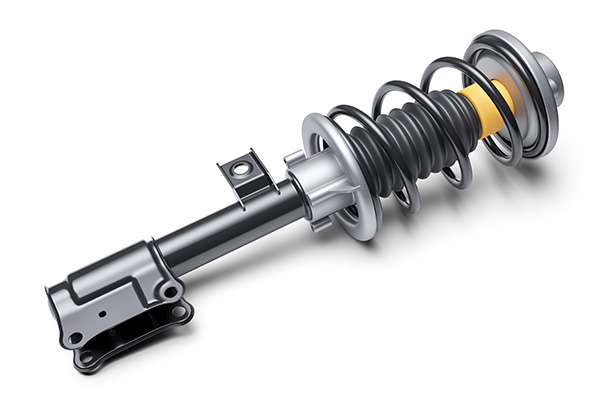
Shocks and struts both control suspension movement, but they are not the same component. A shock absorber mainly controls spring motion, while a strut also serves as a structural part of the suspension and helps support wheel alignment.
Drivers often use the terms interchangeably because both can create similar symptoms when worn. Excessive bouncing, poor tire contact, nose-diving during braking, and unstable cornering can develop with either design. Identifying which system the vehicle uses is the first step toward the correct repair.
What Shock Absorbers Do
A vehicle’s springs support its weight and allow the wheels to move over bumps. Without shock absorbers, the springs would continue bouncing after every dip, pothole, and steering input. Shocks use hydraulic fluid and internal valves to control that motion.
Most shock absorbers mount between the suspension and the vehicle frame or body. They do not usually carry the vehicle’s weight or determine the position of the wheel. Their main responsibility is damping, which keeps spring movement controlled and helps the tire remain in contact with the road.
A worn shock may allow repeated bouncing after a bump. The vehicle can also feel loose during lane changes, lean more through turns, or take longer to settle after crossing uneven pavement.
How Struts Are Different
A strut combines a shock-absorbing unit with a structural suspension member. In many designs, the coil spring surrounds the strut, and the upper strut mount connects the complete assembly to the vehicle body.
Because the strut helps locate the wheel, it can affect steering geometry and wheel alignment. Front struts often turn with the steering system through a bearing in the upper mount. A damaged mount or bearing may cause popping, binding, or uneven steering effort.
Strut replacement commonly requires compressing the coil spring with specialized equipment. The spring stores considerable energy and can cause serious injury if it is released incorrectly. This repair should be completed with the proper tools and procedures.
Common Signs Of Worn Shocks Or Struts
Shocks and struts usually lose effectiveness gradually, so drivers may adapt to the change without realizing how much control has been lost. New noises are possible, but worn dampers do not always clunk or leak.
Watch for these warning signs:
- Repeated bouncing after bumps
- Excessive body lean during turns
- Front-end diving while braking
- Rear-end squatting during acceleration
- Uneven or cupped tire wear
- A floating sensation at highway speed
- Reduced stability in crosswinds
- Fluid leaking from a shock or strut
- Clunking from damaged mounts or bushings
One symptom alone does not confirm that the damper has failed. Tire pressure, alignment, springs, control arm bushings, sway bar parts, wheel bearings, and steering components can create similar behavior.
Do Leaking Shocks Or Struts Require Replacement?
Shocks and struts contain hydraulic fluid. A light film near the upper seal can sometimes result from normal operation, but fluid running down the body of the component indicates a failed seal.
Once enough fluid escapes, the internal valves can no longer control suspension movement correctly. The component may also develop internal aeration, dead spots, or reduced resistance even when no major leak is visible.
A dry exterior does not prove the unit is still effective. Technicians compare resistance, vehicle movement, tire wear, mileage, road behavior, and the condition of related parts during an inspection. Severely worn dampers may have little visible damage.
When Should Shocks And Struts Be Replaced?
There is no single replacement mileage that applies to every vehicle. Service life depends on road conditions, vehicle weight, driving habits, damper design, and exposure to corrosion. Vehicles driven over broken pavement or carrying frequent heavy loads can wear suspension components earlier.
Replacement is appropriate when testing confirms reduced damping, internal damage, significant leakage, bent components, or failed mounting points. They may also need replacement when corrosion threatens structural strength.
Shocks and struts are commonly replaced in axle pairs. Installing one new component beside a heavily worn one can create uneven control from side to side. The springs, mounts, bearings, bump stops, dust boots, and mounting hardware should be evaluated at the same time.
Why Worn Dampers Affect Tires And Braking
A tire must remain firmly connected to the pavement to provide steering and braking force. When a worn shock or strut allows the wheel to bounce, tire contact becomes inconsistent. This can reduce control on rough roads and contribute to cupped tread wear.
During braking, excessive front suspension movement shifts weight forward more abruptly. The vehicle may feel less stable, particularly during emergency stops or while turning. Worn rear dampers can also allow the back of the vehicle to move excessively during acceleration or lane changes.
Replacing damaged dampers cannot restore tires that are already cupped. Tire condition, wheel balance, alignment, and suspension looseness should all be checked before the repair plan is finalized.
Does Strut Replacement Require An Alignment?
Strut replacement often changes or disturbs wheel alignment because the strut may attach directly to the steering knuckle. Even small differences in mounting position can affect camber or toe.
An alignment should be performed after replacing front struts and after rear strut work when the design influences wheel geometry. Before adjustments are made, technicians should confirm that ball joints, tie rods, bushings, wheel bearings, and tires are serviceable.
Shock replacement does not always require alignment because many shocks do not affect wheel position. However, an alignment may still be needed when uneven tire wear, steering pull, or other suspension repairs are present. Regular maintenance should include tire rotation and checks for early wear patterns.
Get Shock And Strut Replacement In Merritt Island, FL, With Inmon Automotive
Inmon Automotive in Merritt Island, FL, can evaluate shocks, struts, mounts, springs, steering parts, suspension bushings, tire wear, and alignment.
Contact us to schedule suspension service if your vehicle bounces, leans, clunks, or feels unstable, and follow us on Facebook for updates.