An engine misfire has a way of making the whole vehicle feel off. The idle may shake a little at a red light, the engine may stumble when you accelerate, or the check engine light may start flashing right when you are trying to merge into traffic. It is one of those problems drivers can feel, even if they do not know the exact name for it.
Spark plugs, ignition coils, and spark plug wires are common causes, but they are not the only possible causes. Fuel delivery, compression, vacuum leaks, sensors, and mechanical engine wear can create similar symptoms. The trick is knowing what ignition trouble usually looks like and why testing matters before throwing parts at the misfire.
What A Misfire Actually Means
A misfire means one or more cylinders did not burn the air-fuel mixture correctly. For the engine to run cleanly, each cylinder needs air, fuel, compression, and spark at the right time. If one of those pieces is missing or weak, the cylinder can stumble rather than produce power.
From the driver’s seat, that may feel like shaking, hesitation, jerking, rough idle, or a sudden drop in power. Sometimes the engine computer catches it and turns on the check engine light. Other times, the problem is mild or intermittent and takes longer to show up as a code.
A misfire should not be ignored. Unburned fuel can reach the exhaust and overheat the catalytic converter. What starts as a worn spark plug or weak coil can become a much more expensive repair if the vehicle is driven too long with a strong misfire.
How Worn Spark Plugs Cause Misfires
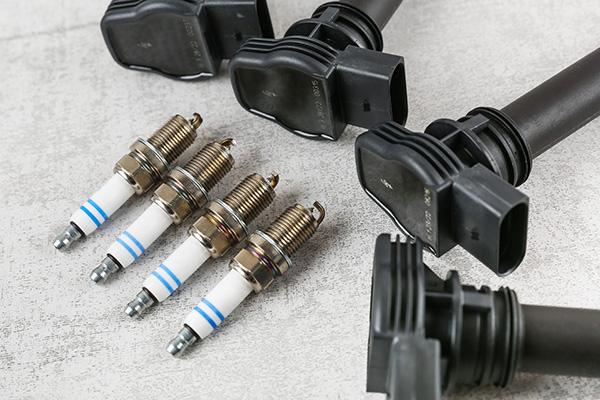
Spark plugs create the spark that lights the air and fuel mixture inside the cylinder. They live in a harsh environment, surrounded by heat, pressure, fuel, carbon, and thousands of combustion events per minute. Over time, the electrode wears, and the spark gap can grow.
When plugs wear out, the spark may become weak or inconsistent. The engine may start harder, idle rough, hesitate under load, or misfire when accelerating. This is often more noticeable uphill, during passing, or when the engine is cold.
Spark plugs can also tell a story when removed. Oil-fouled plugs may point toward oil burning or leaking into the plug wells. White deposits can suggest heat or mixture concerns. A plug that looks different from the others can help narrow down which cylinder is having trouble.
How Ignition Coils Fail
Ignition coils create the high voltage needed for the spark plug to fire. Many modern vehicles use one coil per cylinder, while others use coil packs. Either way, a weak coil can misfire when the engine needs spark strength the most.
Coils often fail under load before they fail all the time. That means the engine may idle decently but stumble when you press the gas. Heat can also make a weak coil act worse. A vehicle may run well first thing in the morning, then start misfiring after the engine warms up.
Common coil-related symptoms include a flashing check engine light, shaking under acceleration, poor fuel economy, and one cylinder misfire code. Still, the coil should be tested because a bad spark plug, wiring issue, injector problem, or low compression can make the same cylinder look guilty.
When Spark Plug Wires Are The Problem
Older ignition systems and some engines still use spark plug wires. These wires carry high voltage from the coil or distributor to the spark plugs. As wires age, the insulation can crack, resistance can increase, or the wire can leak spark before it reaches the plug.
Wire problems can be worse in damp weather. If the engine runs rough after rain, after washing the vehicle, or on humid mornings, old plug wires may be part of the issue. You might also feel hesitation, rough idle, or misfiring under acceleration.
A damaged wire can sometimes leave burn marks, arcing marks, or a rough spot where the insulation has broken down. Wires should also be routed correctly. If they are touching hot parts or rubbing against metal brackets, they can fail sooner.
Clues That Point Toward Ignition Trouble
Ignition misfires often have patterns. The details can help separate a spark problem from a fuel or mechanical issue.
- The engine shakes most under acceleration because a weak spark often occurs when cylinder pressure rises, making it harder to fire the plug.
- The check engine light flashes during heavy misfiring because the computer sees a misfire strong enough to threaten the catalytic converter.
- The problem gets worse in wet weather when old plug wires or cracked coil boots allow spark to leak.
- A single-cylinder misfire returns after clearing codes because one plug, coil, wire, injector, or compression issue remains.
- The engine starts fine but runs rough when hot because heat can expose weak coils, wiring, or connection problems.
These clues do not replace testing, but they give the technician a better starting point.
Why A Code Does Not Always Name The Bad Part
A code such as P0302 may indicate that cylinder 2 is misfiring. It does not automatically mean cylinder two needs a coil. The computer knows the cylinder is not contributing correctly, but it does not always know why.
A technician may swap coils, inspect plugs, check coil boots, measure resistance, test injector operation, look for vacuum leaks, check fuel trims, or run a compression test depending on what the vehicle shows. That process prevents replacing ignition parts when the real problem is fuel, air, or mechanical wear.
This matters because misfire repairs can get expensive when parts are replaced based on assumptions. A careful inspection usually saves time in the long run.
Why Misfires Should Be Fixed Early
A small misfire can become a bigger problem. Raw fuel entering the exhaust can damage the catalytic converter. A worn spark plug can overwork the coil. Oil leaking into a plug well can ruin ignition parts again if the leak is not fixed. A misfire from low compression can point toward engine trouble that needs a different repair plan entirely.
Regular maintenance helps prevent many ignition-related misfires. Spark plugs should be replaced at the correct interval, wires should be checked when the vehicle is in use, and oil leaks around plug wells should be addressed before they damage coils or boots.
Get Misfire Diagnostics In Merritt Island, FL, With Inmon Automotive
If your vehicle shakes, hesitates, flashes the check engine light, runs rough, or keeps setting misfire codes, Inmon Automotive in Merritt Island, FL, can test the spark plugs, ignition coils, wires, fuel system, and related engine concerns.
Follow us on Facebook for updates, and contact us to schedule an appointment.